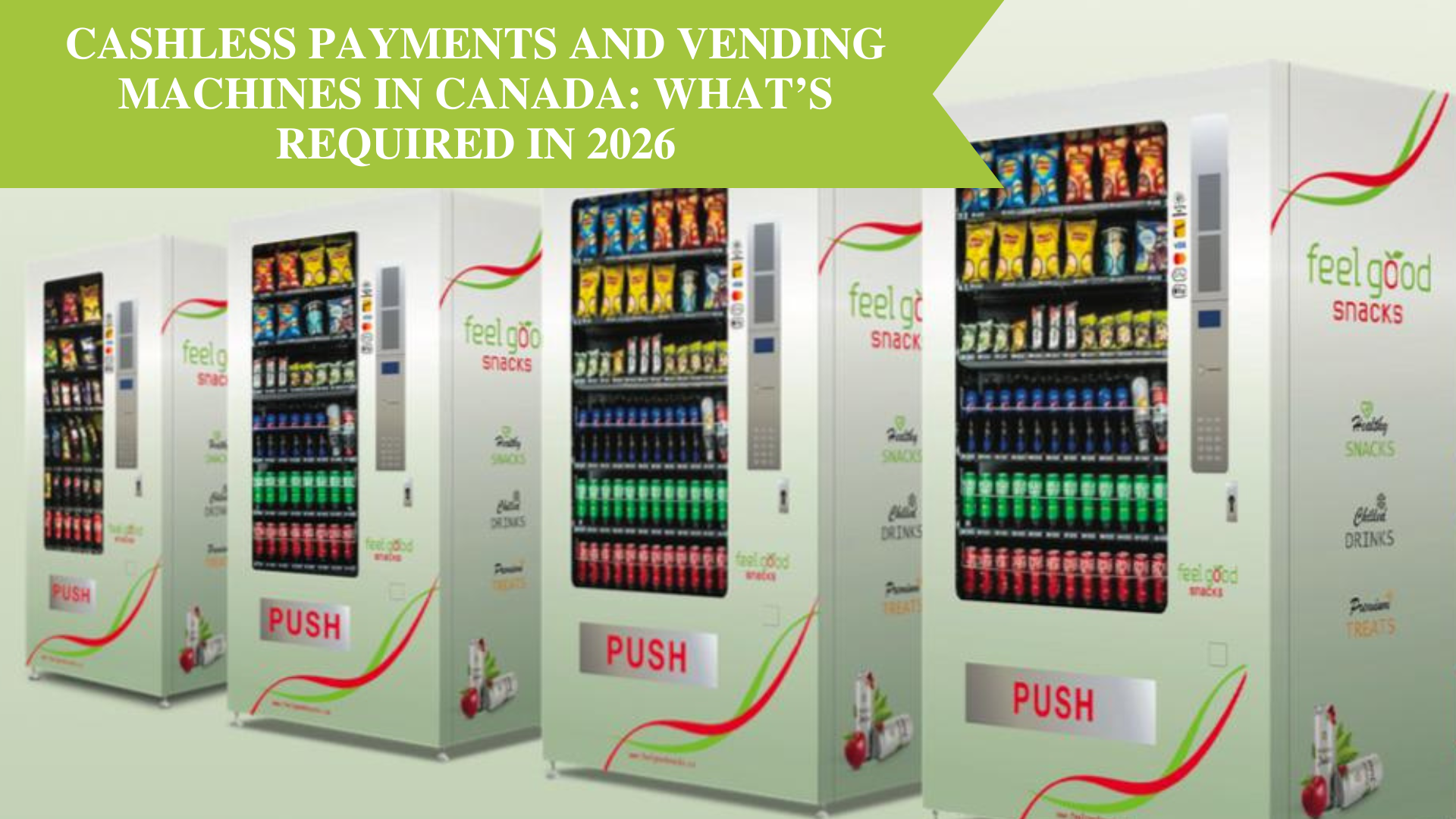
Cashless payments are no longer a “nice to have” feature in Canadian vending machines — they are quickly becoming the standard. As we move into 2026, offices, condos, gyms, hospitals, and industrial facilities increasingly expect vending machines to support tap and mobile payments.
For businesses and property managers, choosing the wrong vending machine today can mean lost sales, frustrated users, or expensive upgrades later. This guide breaks down what is actually required for cashless vending in Canada, what is optional, and what buyers should look for before making a purchase.
Are Cashless Payments Mandatory for Vending Machines in Canada?
From a legal standpoint, cashless payments are not explicitly mandatory for vending machines in Canada. However, in real-world commercial environments, cashless functionality is often required by location owners.
Many office buildings, condominiums, hospitals, and gyms now expect:
- Tap payments (Interac, credit cards)
- Mobile wallets such as Apple Pay and Google Pay
- Reduced or no cash handling on-site
As a result, cash-only vending machines are increasingly rejected during location approvals, even if they are technically allowed.
Common Cashless Payment Options Used in Canadian Vending Machines
Modern vending machines in Canada typically support multiple cashless payment methods:
- Interac tap – widely expected by Canadian users
- Credit cards – Visa and Mastercard
- Mobile wallets – Apple Pay and Google Pay
- QR-based payments – used selectively, depending on location and audience
Machines that support multiple payment types generally see higher usage and better customer satisfaction compared to cash-only units.
What Hardware Is Required for Cashless Vending in Canada?
To enable cashless payments, vending machines require more than just a card reader. A proper setup includes:
- Card reader compatible with Canadian payment networks
- Telemetry unit to process transactions and report sales data
- Reliable internet connectivity, typically 4G or 5G
Low-cost or imported machines often struggle in this area, leading to failed transactions, connectivity issues, or limited upgrade options.
Are Cashless Vending Machines CSA Approved?
CSA approval remains a key consideration when buying vending machines in Canada. While cashless payment systems themselves are not separately “CSA certified,” the vending machine as a whole must comply with Canadian safety and electrical standards.
Problems typically arise when:
- Machines are imported without proper certification
- Payment hardware is poorly integrated
- Electrical components do not meet Canadian requirements
Buying from a Canadian supplier with local support helps reduce these risks significantly.
Costs to Add Cashless Payments to a Vending Machine in Canada
Costs vary depending on machine type and setup, but buyers should plan for:
- Upfront hardware costs for card readers and telemetry
- Monthly connectivity fees for data transmission
- Transaction processing fees, similar to retail card payments
Although this adds ongoing cost, most operators find that cashless machines generate higher overall sales, offsetting these expenses.
Cashless vs Cash-Only Vending Machines: What Actually Performs Better?
In most Canadian commercial settings, cashless vending machines outperform cash-only machines in several ways:
- Higher sales volume due to ease of use
- Better acceptance by property managers
- Reduced maintenance related to cash handling
- Improved customer experience
Cash-only machines may still work in limited environments, but their relevance continues to decline.
Best Locations for Cashless Vending Machines in Canada
Cashless vending machines are particularly effective in:
- Office buildings
- Condominiums and residential towers
- Gyms and fitness centers
- Warehouses and industrial facilities
- Hospitals and healthcare settings
In these environments, users often expect quick, contactless transactions without carrying cash.
What to Look for When Buying a Cashless Vending Machine in Canada
Before purchasing, buyers should evaluate:
- Built-in support for cashless payments
- Compatibility with Canadian payment networks
- Availability of parts and service in Canada
- Upgrade flexibility for future payment technologies
- Warranty and after-sales support
If you are comparing options, it’s worth exploring modern vending machines for sale in Canada that are designed specifically for cashless and commercial use.
For locations that need both snacks and beverages, combo vending machines offer a practical, space-efficient solution with integrated payment support.
Final Thoughts: Is Cashless Vending Worth It in 2026?
For most commercial environments in Canada, the answer is yes. Cashless vending machines align with customer expectations, improve usability, and make it easier to secure high-quality locations.
As payment behavior continues to shift, investing in a machine that supports modern payment methods is less about trends and more about long-term practicality.
Frequently Asked Questions About Cashless Vending in Canada
Are cashless payments mandatory for vending machines in Canada?
Cashless payments are not legally mandatory across Canada, but many commercial locations such as offices, condominiums, gyms, and hospitals now require vending machines to support tap or cashless payments as part of their approval process.
What cashless payment methods should vending machines support in Canada in 2026?
Most Canadian locations expect vending machines to accept Interac tap, major credit cards, and mobile wallets like Apple Pay and Google Pay. Machines that support multiple payment options generally perform better and are easier to place in commercial environments.
What hardware is required to run cashless payments on vending machines?
Cashless vending machines typically require a compatible card reader, a telemetry unit to process transactions and track sales data, and reliable internet connectivity such as 4G or 5G. Proper integration is essential for consistent performance.
Do cashless vending machines need CSA approval in Canada?
While payment systems themselves are not separately certified, vending machines sold or installed in Canada should comply with Canadian electrical and safety standards. Issues often arise with imported or modified machines that lack proper certification or integration.
How much does it cost to add cashless payments to a vending machine in Canada?
Costs vary depending on the machine and provider, but buyers should expect upfront hardware costs for cashless components, ongoing connectivity fees, and standard payment processing charges per transaction.
Are cashless vending machines more profitable than cash-only machines?
In many Canadian commercial settings, cashless vending machines outperform cash-only machines due to easier purchasing, better location acceptance, and reduced cash handling. Actual results depend on location, product mix, and user demand.
Which locations in Canada benefit most from cashless vending machines?
Cashless vending machines work especially well in offices, condominiums, gyms, warehouses, hospitals, and other high-traffic environments where users expect fast, contactless payments.
What should I look for when buying a cashless vending machine in Canada?
When buying a cashless vending machine, look for built-in payment support, compatibility with Canadian payment networks, reliable connectivity, upgrade flexibility, and strong after-sales service and warranty coverage in Canada.