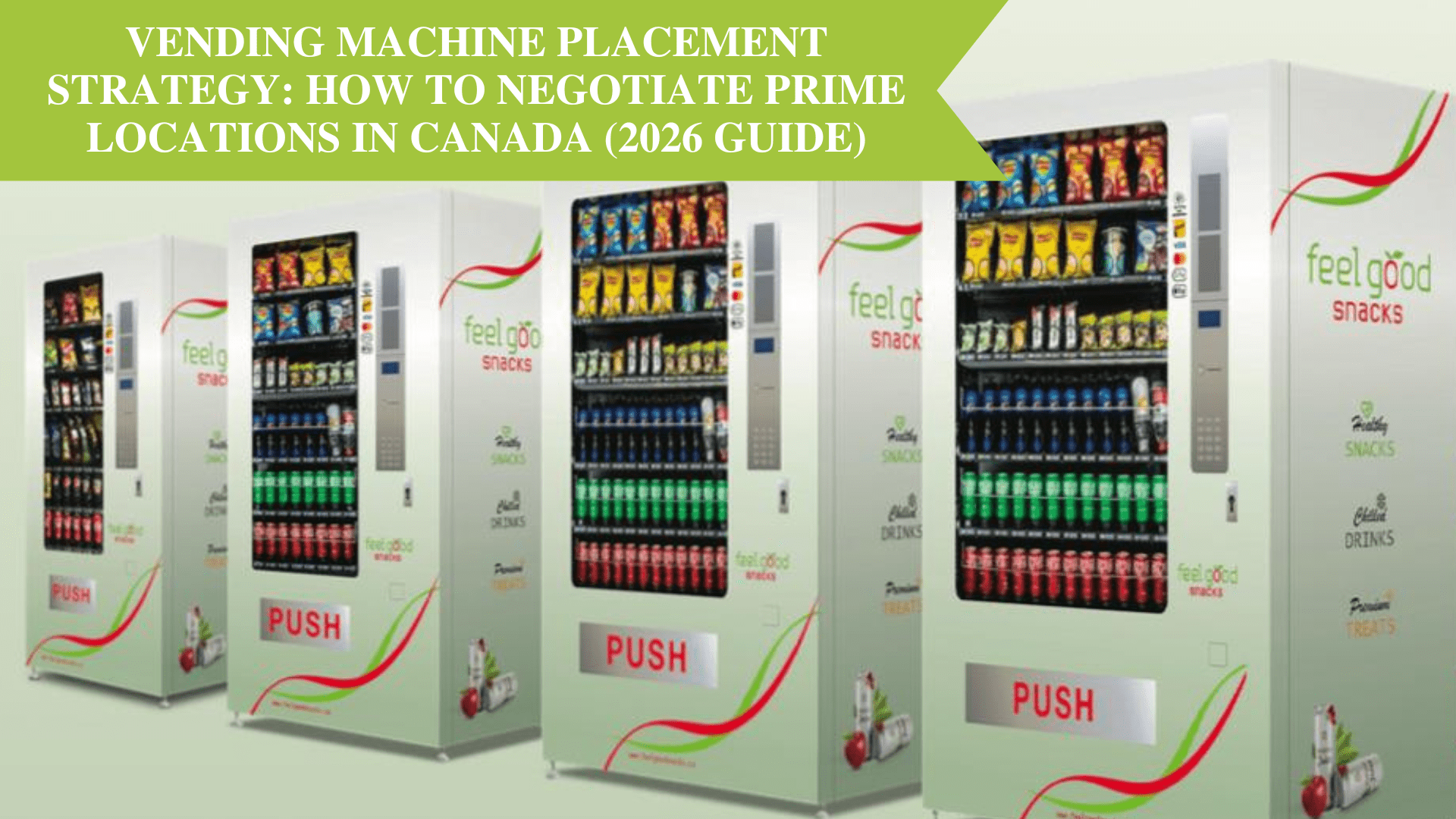
A vending machine’s success depends more on location than machine type.
You can invest in the best smart-enabled combo unit available, but if it’s placed in a low-traffic corner with minimal footfall, revenue will suffer.
In Canada’s competitive commercial landscape, securing prime vending machine locations requires strategy, data, and negotiation skills.
This guide explains how to identify high-performing sites and negotiate placements that maximize ROI.
Why Location Determines Profitability
Vending revenue depends on:
- Foot traffic volume
- Customer profile
- Dwell time
- Accessibility
- Payment convenience
High-traffic areas generate consistent sales. Low-traffic areas create unpredictable revenue.
Before purchasing from available vending machines for sale in Canada, placement strategy should be planned first
Ideal High-Performing Locations in Canada
The most profitable vending locations often include:
1. Corporate Office Buildings
Steady weekday traffic and repeat customers.
2. Hospitals & Healthcare Facilities
24/7 traffic and high beverage demand.
3. Industrial & Manufacturing Sites
Energy drinks and packaged meals perform strongly.
4. Residential High-Rises
Convenience-based impulse purchases.
5. Universities & Colleges
High snack consumption and digital payment adoption.
Each environment requires tailored product selection and machine configuration.
Step 1: Analyze Traffic Before Approaching Property Managers
Before negotiating, gather data:
- Estimated daily foot traffic
- Peak operating hours
- Existing food alternatives nearby
- Demographic profile
If similar buildings in the area have vending machines, analyze performance benchmarks.
Location data strengthens negotiation leverage.
Step 2: Present a Value Proposition (Not Just a Machine)
When approaching property managers, emphasize:
- Tenant convenience
- Employee satisfaction
- Passive income potential
- No upfront cost (under revenue share model)
- Professional servicing support
Link your pitch to modern, cashless-enabled systems by Feel Good Snacks Vending Machines
Position vending as a service enhancement, not equipment placement.
Step 3: Understand Revenue Share Negotiations
Most commercial placements operate under revenue share agreements.
Negotiation factors include:
- Foot traffic volume
- Machine size
- Payment technology
- Restocking frequency
Revenue share should align with expected sales volume.
Avoid offering high percentages in low-traffic buildings — margins disappear quickly.
Step 4: Negotiate Space & Visibility
Machine placement within the building matters.
Ideal positioning:
- Near entrances
- Break rooms
- Elevator lobbies
- Waiting areas
- High-traffic corridors
Avoid:
- Hidden corners
- Areas with poor lighting
- Restricted access zones
Visibility directly affects sales.
Step 5: Ensure Contract Clarity
Before finalizing placement, confirm:
- Contract duration
- Servicing responsibility
- Revenue reporting transparency
- Exit clauses
Clarity prevents disputes later.
Step 6: Leverage Cashless Technology for Negotiation Advantage
Property managers are more receptive to modern, secure systems.
Highlight:
- Cashless payments
- Reduced theft risk
- Remote monitoring
- Automated reporting
Technology increases perceived professionalism.
Step 7: Customize Product Mix by Location
High-performing operators adapt inventory:
- Offices: balanced snack + beverage mix
- Gyms: protein bars + sports drinks
- Healthcare: healthier snack options
- Industrial sites: energy-dense products
Flexible combo machines offer broader product appeal.
Step 8: Monitor Performance After Placement
Placement is not static.
Track:
- Monthly revenue
- Product turnover
- Stockout frequency
- Customer feedback
If performance underperforms, consider:
- Product adjustments
- Pricing changes
- Relocation within building
Data-driven optimization ensures continued profitability.
Common Placement Mistakes
- Accepting low-traffic spaces without data
- Overpaying revenue share in weak locations
- Ignoring contract details
- Placing machines where visibility is limited
- Failing to adjust inventory to location type
Avoiding these errors increases long-term success.
When to Purchase Instead of Revenue Share
Some operators prefer owning machines outright.
If purchasing directly, review transparent listings under vending machine for sale Canada
Ownership provides control but requires active management.
Scaling Multiple Locations
Successful operators:
- Standardize negotiation framework
- Track performance benchmarks
- Focus on high-traffic commercial environments
- Leverage smart data insights
Prime locations create predictable recurring revenue streams.
Final Thoughts
Securing prime vending machine locations in Canada requires more than placing equipment.
It requires:
- Data-driven evaluation
- Strong value proposition
- Strategic revenue share negotiation
- Smart technology integration
- Ongoing performance tracking
Location quality determines long-term ROI.
When combined with modern vending machines and effective inventory management, prime placement transforms vending into a scalable business model.
Frequently Asked Questions
How do I find good vending machine locations in Canada?
Focus on high-traffic commercial buildings such as offices, hospitals, universities, and residential towers.
What is a typical revenue share for vending placements?
Revenue share varies based on traffic and negotiation terms. It should align with projected sales volume.
Should I pay rent or offer a revenue share?
Revenue share is common in Canada. Paying fixed rent is less typical unless traffic is guaranteed.
How important is machine visibility?
Visibility is critical. Machines placed in high-traffic, visible areas outperform hidden placements.
Do smart vending machines help secure locations?
Yes. Cashless and telemetry features increase credibility and appeal to property managers.