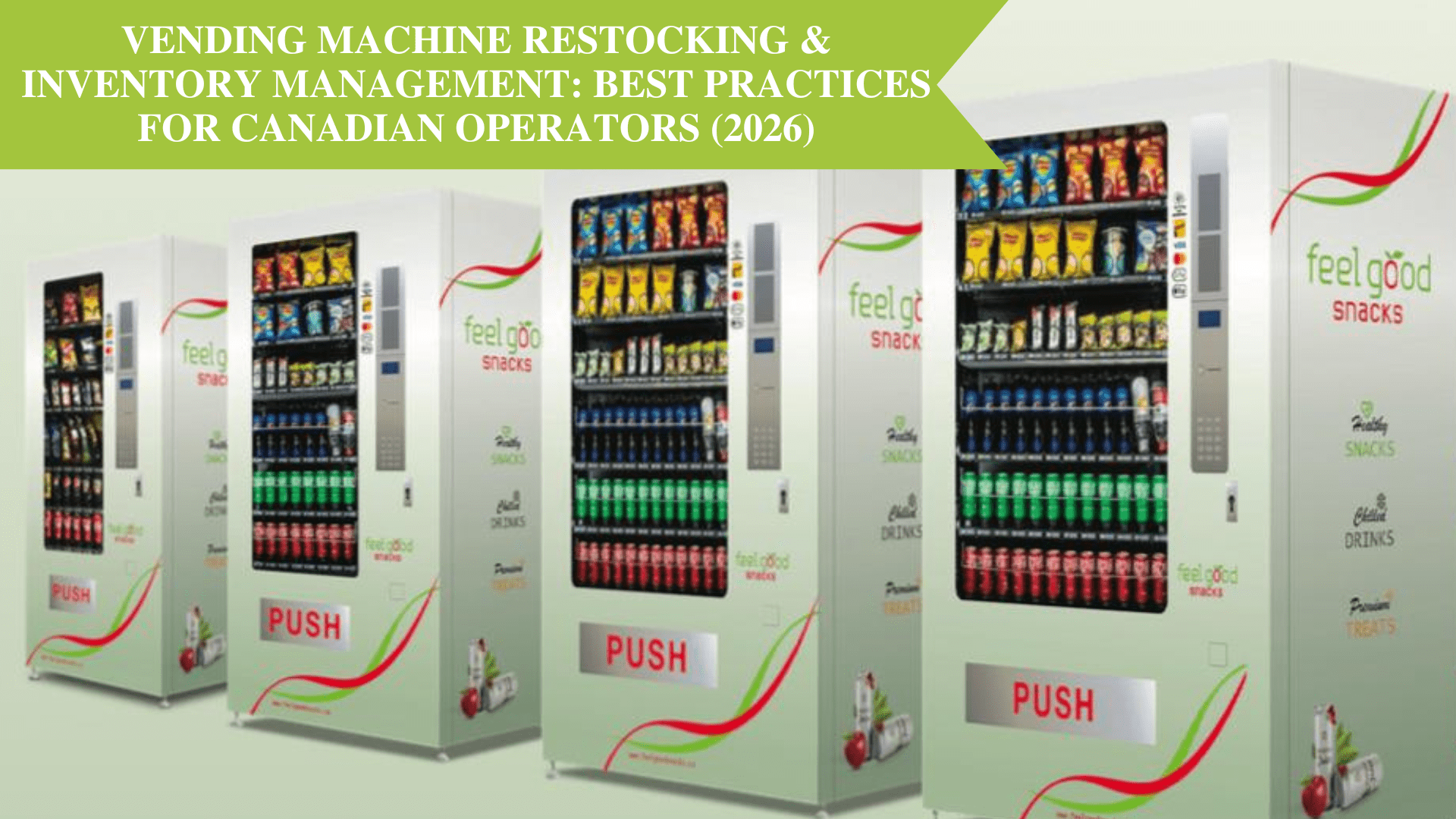
Buying the right vending machine is only the first step. Long-term profitability depends on how well you manage restocking and inventory.
Across Canada, vending machine operators who optimize inventory management consistently outperform those who rely on guesswork. Poor restocking leads to stockouts, expired products, reduced customer satisfaction, and lost revenue.
In this 2026 guide, we break down best practices for vending machine restocking and inventory management specifically for Canadian operators.
Why Inventory Management Matters More Than Machine Type
Whether you operate snack machines, drink machines, or combo units, inventory strategy determines:
- Revenue consistency
- Product turnover speed
- Waste reduction
- Customer retention
- Overall ROI
Even the best vending machines for sale in Canada cannot compensate for poor restocking planning.
Explore modern vending options here:
https://www.feelgoodsnacks.ca/vending-machines-for-sale
The machine creates opportunity. Inventory execution captures profit.
Step 1: Understand Your Location’s Consumption Patterns
Inventory decisions must be data-driven.
Different Canadian environments consume products differently:
- Office buildings: strong weekday demand, slower weekends
- Gyms: beverage-heavy consumption
- Schools: snack-focused purchasing
- Industrial sites: higher energy drink and packaged meal demand
Before establishing a restocking schedule, track:
- Top-selling SKUs
- Low-performing products
- Average daily sales volume
- Peak purchase times
Smart vending machines with telemetry help simplify this process.
Review modern vending machines in Canada with tracking features at Feel Good Snacks
Step 2: Establish a Structured Restocking Schedule
Restocking should follow a predictable cadence.
Common restocking frequencies:
- High-traffic offices: 1–2 times per week
- Medium-traffic buildings: once weekly
- Low-volume sites: biweekly
Avoid both extremes:
- Over-restocking increases expired inventory risk
- Under-restocking leads to empty columns and lost revenue
A reliable vending machine supplier in Canada should provide guidance on optimal restocking frequency based on machine type and location traffic.
Step 3: Optimize Product Mix for Maximum Sales
Inventory management is not just about quantity — it’s about product selection.
Use the 80/20 rule:
- 20% of products often generate 80% of revenue
Monitor:
- Fast-moving items
- Slow sellers
- Expiring inventory
- Customer feedback
Rotate underperforming SKUs and introduce trial products in small quantities before scaling.
Combo vending machines allow flexible product testing, which is one reason they remain popular across Canada.
Step 4: Prevent Stockouts Strategically
Empty slots reduce trust and discourage repeat purchases.
To prevent stockouts:
- Track top-selling items weekly
- Adjust par levels (minimum inventory per slot)
- Monitor seasonal demand (summer beverages, winter snacks)
- Increase restocking frequency during peak periods
Stockouts are not just lost sales — they damage perception of reliability.
Step 5: Reduce Expiry Waste
Expired products directly reduce margin.
Best practices include:
- First-in, first-out (FIFO) stocking
- Monitoring expiry dates during restock
- Avoiding overloading slow-selling products
- Using telemetry data for accurate demand forecasting
Waste reduction directly improves profitability.
Step 6: Use Data to Adjust Pricing
Inventory data reveals:
- High-demand items that tolerate price increases
- Low-performing items needing price adjustments
- Location-specific purchasing behavior
Smart operators use inventory analytics to refine pricing strategy, not just product mix.
Step 7: Leverage Smart Technology
Modern vending machines now offer:
- Real-time inventory monitoring
- Low-stock alerts
- Sales performance dashboards
- Remote pricing updates
Cashless payments also improve purchasing convenience and increase sales volume.
If you are investing in vending machines for sale in Canada, prioritize smart-enabled machines for operational efficiency.
Step 8: Plan for Seasonal Shifts in Canada
Canadian markets experience strong seasonal patterns.
Examples:
- Increased cold beverage sales in summer
- Higher snack and comfort-food purchases in winter
- Back-to-school spikes in fall
Adjust inventory proactively rather than reactively.
Seasonal planning reduces missed revenue opportunities.
Step 9: Standardize Inventory Across Multiple Machines
For operators managing multiple units:
- Standardize core SKUs across locations
- Adjust 20–30% of slots for location-specific preferences
- Track per-machine profitability
Standardization simplifies purchasing and reduces logistical complexity.
Step 10: Track Key Inventory Performance Metrics
Operators should monitor:
- Inventory turnover rate
- Stockout frequency
- Waste percentage
- Average revenue per slot
- Product category performance
Without metrics, optimization becomes guesswork.
Common Inventory Management Mistakes
- Restocking on a fixed schedule without reviewing sales data
- Keeping low-performing SKUs for too long
- Ignoring seasonal demand shifts
- Over-ordering to “save time”
- Not leveraging smart telemetry tools
Avoiding these mistakes significantly improves margin stability.
How Inventory Impacts Long-Term Profitability
A vending machine’s performance depends on:
- Location quality
- Product selection
- Pricing strategy
- Uptime
- Inventory discipline
Operators who master restocking processes often generate significantly stronger recurring revenue than those who treat vending as passive.
Inventory optimization transforms vending from a machine purchase into a scalable business system.
Final Thoughts
Vending machine restocking and inventory management are not secondary tasks — they are primary profit drivers.
Canadian operators who:
- Track data
- Adjust product mix
- Prevent stockouts
- Reduce expiry waste
- Use smart technology
consistently outperform competitors. Whether operating a single machine or scaling nationally, structured inventory strategy directly impacts ROI.
Frequently Asked Questions
How often should vending machines be restocked in Canada?
Restocking frequency depends on location traffic. High-traffic sites may require weekly or twice-weekly restocking, while lower-traffic locations may require biweekly visits.
How do I reduce expired products in vending machines?
Use FIFO stocking methods, monitor slow-moving SKUs, and adjust product quantities based on sales data.
What products sell best in Canadian vending machines?
Top sellers vary by location but typically include bottled beverages, chips, chocolate bars, and energy drinks.
Do smart vending machines improve inventory management?
Yes. Smart machines provide real-time sales tracking and inventory alerts, reducing stockouts and waste.
How can I increase vending machine profitability?
Optimize product mix, adjust pricing based on demand, reduce waste, prevent stockouts, and use telemetry tools to monitor performance.