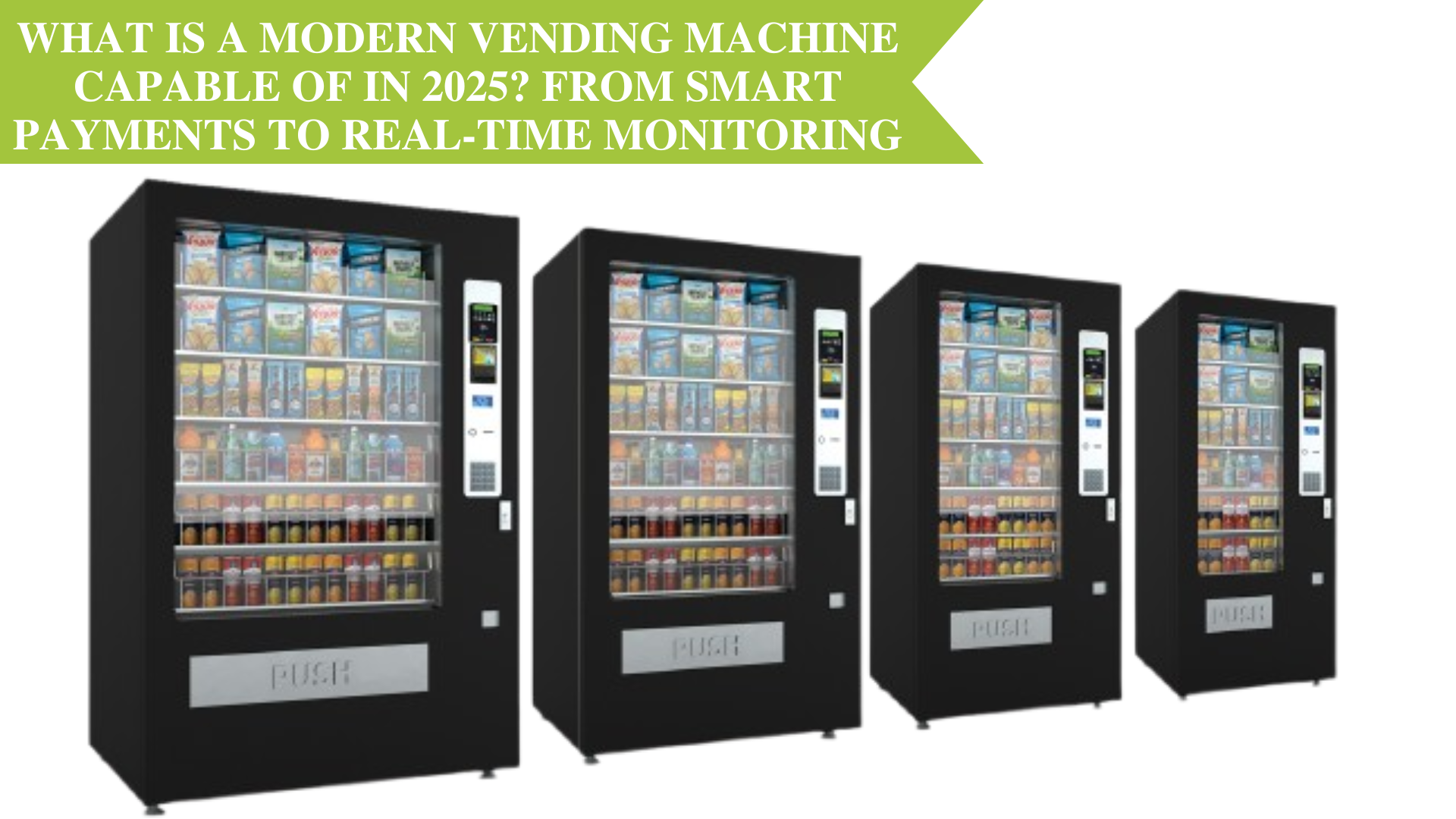
The vending machine of 2025 is no longer just a snack dispenser — it’s an intelligent, connected retail system. Across Canada, these machines are transforming how people access food, beverages, and even electronics. The new generation of smart vending machines combines convenience, automation, and sustainability in one compact unit.
Here’s how technology has redefined what vending machines can do — and why the latest vending machine technology is reshaping retail, workplaces, and schools across Canada.
1. From Mechanical Boxes to Connected Retail Hubs
Traditional vending machines were simple mechanical devices. They accepted coins, dropped products, and required manual monitoring. In 2025, that model is obsolete.
Modern vending machines in Canada are powered by Internet-of-Things (IoT) technology, cloud connectivity, and smart sensors. Each unit can:
- Send live inventory updates.
- Report temperature, power, or payment issues instantly.
- Sync product data across networks.
- Accept multiple payment types without physical cash.
The result? A smarter, more efficient system that improves uptime, reduces waste, and enhances customer experience.
2. Cashless and Contactless by Default
Cash is rapidly disappearing from vending transactions. In 2025, the majority of Canadian vending purchases happen through tap, debit, or mobile payments.
Today’s vending machines feature:
- NFC readers for tap cards and phones.
- Mobile wallet compatibility with Apple Pay and Google Pay.
- QR-based payments for corporate accounts or loyalty systems.
These innovations have removed one of vending’s biggest friction points: the need for coins or bills. Whether in a Toronto office or an Ottawa gym, customers can make quick, touch-free purchases — a change that accelerated after the pandemic.
3. Real-Time Monitoring and Remote Control
One of the most valuable advances in smart vending machines is their ability to self-report and be managed remotely.
Operators now have access to cloud dashboards that show:
- Live sales and stock levels across every machine.
- Maintenance alerts before breakdowns occur.
- Performance reports by product, time, or location.
Instead of driving from site to site, operators can plan efficient restocks based on data. This drastically cuts operating costs and eliminates the downtime that once plagued the industry.
For example, an operator managing units in Toronto, Mississauga, and Barrie can see exactly which products are selling fastest — and update prices or promotions from a laptop.
4. Smarter Sensors and Predictive Intelligence
Sensors are the unsung heroes of the modern vending system. They make the machines both reliable and intelligent.
Common technologies include:
- Infrared and weight sensors to confirm successful dispensing.
- Temperature sensors for cold or hot compartments.
- Motion sensors to power up lighting and displays only when users approach.
These features don’t just improve performance — they give operators insight into consumer behaviour, helping them refine product selection and reduce waste.
5. Sustainability and Energy Efficiency
Sustainability has become a selling point for vending machine suppliers in Canada.
Modern models are built to minimize their environmental footprint with:
- Energy-efficient compressors and low-power LED lighting.
- Eco-friendly refrigerants that meet Canadian environmental standards.
- Sleep mode technology when no motion is detected.
- Recyclable components for easier end-of-life management.
Businesses and institutions installing new vending machines often do so as part of broader ESG or green initiatives, since they can cut energy consumption without reducing access to convenient snacks and drinks.
6. Customization for Every Location
One major advantage of today’s machines is how customizable they are. Businesses no longer need to settle for generic vending layouts.
Available options include:
- Combo configurations (snacks + beverages).
- Temperature-controlled zones for mixed products.
- Touchscreen menus showing nutrition facts and images.
- Branding wraps to match office or campus themes.
- Adjustable shelving for healthier or larger products.
A Toronto co-working space, for example, might choose a slimline model with coffee and snacks, while a university in Montreal might install larger refrigerated units with bottled drinks and fresh food.
Customization ensures each machine aligns with the environment — whether it’s a corporate office, fitness club, or residential building.
7. Smarter Experiences Across Canadian Cities
Toronto:
Corporate offices downtown are adopting touchscreen combo vending machines with smart payment tech and digital menus. These units provide healthier product mixes and detailed ingredient info — something employees increasingly value.
Vancouver:
Fitness studios and wellness centres are using refrigerated smart vending systems for protein shakes, meal bars, and energy drinks. The real-time monitoring ensures freshness and eliminates overstocking.
Ottawa:
Universities and public buildings now install bilingual vending machines that display both English and French interfaces. The data analytics help administrators track usage and tailor offerings seasonally.
8. The Role of Data in the Vending Industry
The most powerful change in the vending business isn’t hardware — it’s data.
Smart vending machines generate performance insights that help operators:
- Identify high-performing products and locations.
- Predict maintenance needs before they become issues.
- Improve product assortment using sales analytics.
- Coordinate delivery routes for restocking efficiency.
With these tools, vending businesses can scale faster, serve customers better, and minimize waste. It’s retail automation at its most practical.
9. The Future: Beyond Snacks and Drinks
As vending technology advances, machines are branching out far beyond chips and soda. In 2025, Canada’s vending landscape includes:
- Pharmacy vending for health essentials.
- Electronics vending in airports and transit hubs.
- Office supply vending for hybrid work environments.
- Fresh food vending with refrigerated and temperature-controlled units.
Each innovation pushes vending closer to fully automated retail — where customers can purchase almost anything, anytime, anywhere.
Conclusion
The vending machine has quietly become one of the most advanced retail technologies in the world.
In Canada, smart vending machines now combine real-time data, sustainability, and customer-friendly features that make them indispensable for businesses, schools, and public spaces.
If you’re exploring the latest vending machine technology or want to modernize your workplace amenities, look for suppliers who offer smart monitoring, cashless payment options, and flexible product configurations.
Explore Feel Good Snacks’ vending solutions — designed for modern Canadian environments that demand convenience, efficiency, and innovation.