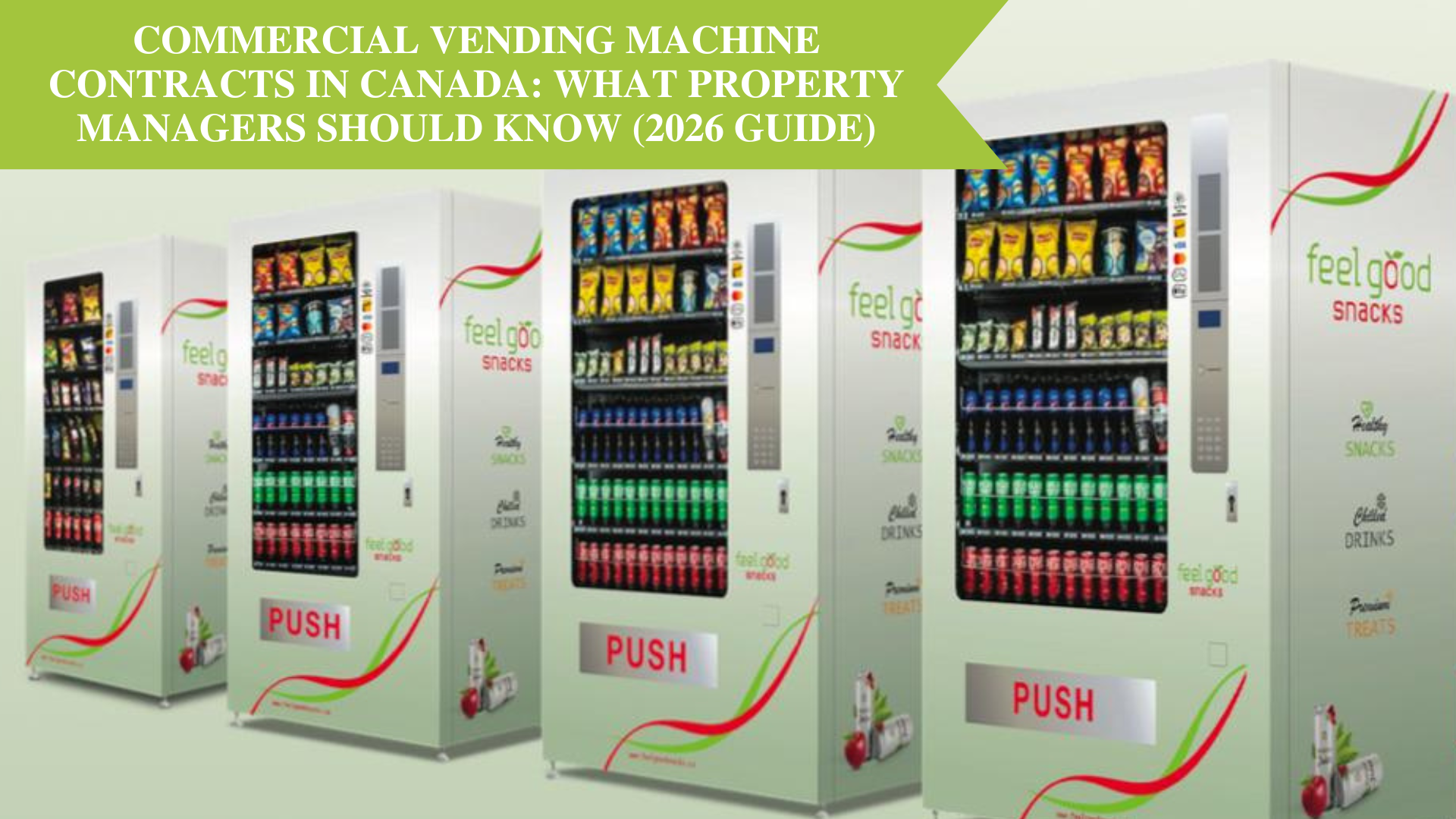
Installing distributeurs automatiques in commercial buildings can improve tenant satisfaction, employee convenience, and even generate passive revenue. However, before placing a machine, property managers and business owners must understand how vending machine contracts work in Canada.
A well-structured contract protects both parties. A poorly structured one can create servicing issues, revenue disputes, and long-term complications.
This guide explains everything property managers should review before signing a commercial vending machine agreement in 2026.
What Is a Commercial Vending Machine Contract?
A commercial machine distributrice contract is a written agreement between:
- The vending machine supplier or operator
- The property owner or building manager
The contract outlines:
- Machine placement terms
- Revenue share agreements
- Servicing responsibilities
- Contract duration
- Termination clauses
Whether you’re installing a snack machine, drink machine, or combo unit, contracts define expectations clearly.
Explorez notre machines distributrices à vendre au Canada here
Common Types of Vending Agreements in Canada
There are three primary contract structures:
1. Revenue Share Model
In this model:
- The supplier installs and maintains the machine
- The property owner receives a percentage of monthly revenue
This is common in office buildings, healthcare facilities, and residential towers.
Revenue share typically ranges depending on traffic volume and agreement structure.
2. Lease Model
In a lease agreement:
- The property owner pays a fixed monthly fee
- The machine is operated by the property owner
This model is less common for passive placements but used in some commercial settings.
3. Purchase Model
Under this model:
- The property owner purchases the vending machine outright
- The owner controls inventory and revenue
Ownership provides control but also full operational responsibility.
Key Clauses to Review in a Vending Machine Contract
Before signing, property managers should carefully review the following:
1. Contract Duration
Typical agreements range from:
- 1 to 5 years
Long-term contracts may offer stability but reduce flexibility. Ensure there are renewal and termination clauses clearly defined.
2. Revenue Share Percentage
If operating under revenue share:
- Confirm how revenue is calculated
- Clarify whether it is based on gross or net sales
- Determine payment frequency
Transparency prevents disputes later.
3. Servicing and Maintenance Responsibilities
The contract should clearly state:
- Who handles repairs
- Response time for service calls
- Fréquence de réapprovisionnement
- Parts replacement coverage
Reliable servicing is critical to uptime.
4. Product Control
Some contracts allow property managers to:
- Request specific product types
- Require healthier options
- Limit certain categories
Clarify whether the product mix is customizable.
5. Space and Utility Requirements
The agreement should outline:
- Space allocation
- Electrical access
- Liability coverage
- Insurance requirements
Improper placement can create operational issues.
Legal and Compliance Considerations in Canada
Commercial vending contracts must align with:
- Provincial regulations
- Health and safety standards
- Food handling requirements
- Electrical compliance codes
Ensure your supplier operates within Canadian regulatory frameworks.
Termination and Exit Clauses
Exit terms are often overlooked.
Review:
- Notice periods
- Early termination penalties
- Equipment removal responsibilities
A flexible exit clause protects long-term building interests.
Revenue Potential for Property Managers
Distributeur automatique placements can generate:
- Passive monthly income
- Improved tenant satisfaction
- On-site convenience benefits
However, revenue depends heavily on traffic volume and product selection.
Operators using modern smart machines with telemetry and cashless payments often generate stronger performance.
Explorez nos modernes distributeurs automatiques au Canada
Questions Property Managers Should Ask Before Signing
- Who owns the machine?
- What is the service response time?
- How often is the machine restocked?
- What happens if the machine underperforms?
- Can product selection be adjusted?
- Is there local province-level support?
For Ontario placements, review our locations for sale. Province-level servicing reduces downtime risk.
Common Mistakes in Commercial Vending Contracts
- Failing to review revenue calculation methods
- Ignoring servicing clauses
- Accepting long-term lock-ins without exit options
- Not confirming insurance coverage
- Overlooking performance benchmarks
Clear documentation prevents long-term disputes.
When Buying Instead of Revenue Sharing Makes Sense
Some commercial property owners prefer full ownership.
Les avantages incluent :
- Full revenue control
- Complete product control
- Long-term asset ownership
However, ownership requires active management and inventory oversight.
If purchasing directly, compare available machines distributrices à vendre au Canada carefully.
Dernières réflexions
Commercial vending machine contracts in Canada should protect both property managers and suppliers.
Before signing:
- Understand contract structure
- Review servicing clauses
- Confirm revenue calculations
- Ensure regulatory compliance
- Negotiate clear termination terms
Well-structured agreements create long-term stability and predictable performance.
Foire aux questions
How long do vending machine contracts last in Canada?
Contracts typically range from one to five years, depending on agreement structure.
Do property managers earn revenue from vending machines?
Yes, under revenue share agreements, property managers often receive a percentage of sales.
Who is responsible for servicing vending machines?
Responsibility depends on contract type. Under revenue share models, suppliers usually handle servicing.
Can vending contracts be terminated early?
Termination terms depend on contract clauses. Review notice periods and penalties carefully.
Is buying a vending machine better than revenue sharing?
Buying offers full revenue control but requires active management and servicing oversight.