Key Takeaways
- Modern vending machines use advanced technology including IoT, smart sensors, telemetry, and automated cooling systems to deliver reliable 24/7 service.
- Today’s machines support cashless payments, digital wallets, tap-to-pay, and remote monitoring.
- AI-powered features help track inventory, predict stock needs, and optimize product selection.
- Smart vending machines are more energy-efficient, secure, and profitable than older models, making them ideal for offices, schools, gyms, and public spaces.
What Makes a Vending Machine “Modern”?
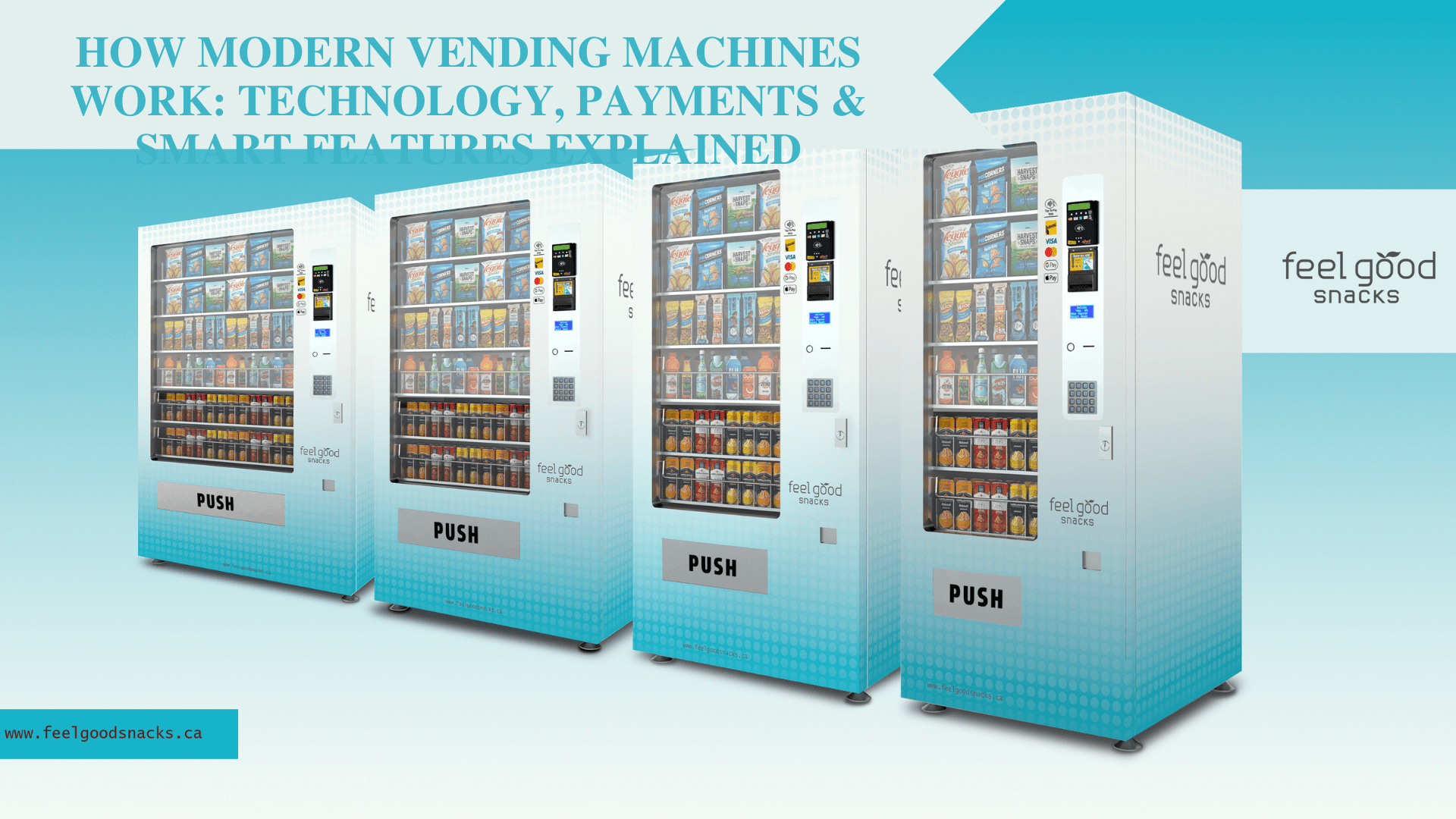
A modern vending machine is far more advanced than the mechanical snack machines of the past. Today’s units use smart networking, sensors, automation, and payment technology to make vending more accurate, user-friendly, and profitable.
Modern vending machines can:
- Track inventory in real time
- Accept touchless and cashless payments
- Send alerts when stock is low
- Maintain stable cooling temperatures
- Provide sales analytics
- Reduce energy use with smart sensors
- Lock down automatically for security
These upgrades dramatically improve reliability and customer experience.
Smart Technology Inside Today’s Vending Machines
1. IoT Connectivity (Remote Monitoring)
IoT allows vending machines to stay connected to the cloud. Operators can monitor:
- Stock levels
- Sales data
- Machine temperature
- Error notifications
- Power consumption
This eliminates guesswork and reduces unnecessary route visits.
2. Smart Sensors & Product Detection
Modern vending machines use optical or weight sensors to confirm:
- Product drop
- Product availability
- Accurate pricing
- Shelf temperature
This significantly reduces customer issues and refund requests.
3. Energy-Efficient Cooling Systems
Cooling technology now includes:
- Variable-speed compressors
- LED lighting
- Automatic power-saving modes
- Insulated cabinets
This reduces electricity use by 30–40% while maintaining product freshness.
4. Cashless & Contactless Payment Technology
One of the biggest upgrades in modern vending machines is payment flexibility.
Supported payment methods include:
- Credit/debit tap
- Interac Flash
- Apple Pay
- Google Wallet
- Mobile QR payments
- Prepaid cards
- Online employee café accounts
This boosts revenue dramatically because fewer people carry cash.
5. Sales Analytics & Real-Time Reporting
Smart vending machines track every sale and display it through a cloud dashboard.
Operators can see:
- Top-selling products
- Peak vending hours
- Low inventory warnings
- Profit per location
- Price optimization opportunities
This transforms vending from guesswork into a data-driven business.
6. Improved Security Features
Security is one of the most important upgrades in modern systems.
Today’s vending machines offer:
- Reinforced steel cabinets
- Anti-drill locks
- Alarm sensors
- Internal surveillance integrations
- Cashless-only configurations (no coin vault risk)
These features protect both revenue and equipment.
7. Automated Inventory Management
Smart vending machines now use automated systems to:
- Track stock levels
- Predict demand
- Suggest restocking schedules
- Monitor expiration dates
This reduces waste and ensures the machine is always ready for customers.
8. Touchscreen Interfaces & User Customization
Many modern vending machines feature touchscreens that allow users to:
- Browse categories
- View product nutrition
- Filter by dietary needs
- Customize payment method
- See digital ads
This creates a more interactive and premium customer experience.
9. How Products Are Dispensed Inside the Machine
Modern vending machines use:
- Elevator systems (for fragile products)
- Helix coils (traditional snack vending)
- Drop sensors for guaranteed delivery
- Beverage stackers and pusher trays
The goal is to deliver products smoothly and reliably every time.
10. Energy Management & Eco-Friendly Features
Modern vending machines are built to reduce their carbon footprint through:
- Smart shutdown periods
- LED lighting
- Efficient insulation
- Low-power modes
- Temperature optimization algorithms
This makes them suitable for energy-conscious businesses—especially in Canada.
Where Modern Vending Machines Are Most Common
Today, smart vending machines are widely used in:
- Offices
- Schools & universities
- Gyms
- Hospitals
- Airports
- Hotels
- Public buildings
- Residential lobbies
Any environment with regular foot traffic benefits from modern vending.
FAQ — Modern Vending Machines (2025)
Q1. Are modern vending machines more profitable?
Yes. Cashless payments, remote monitoring, and energy efficiency all increase profitability.
Q2. Do smart vending machines require the internet?
Yes, but usually through a built-in cellular modem—no WiFi needed.
Q3. Can vending machines run 24/7?
Absolutely. Cooling systems are designed for continuous operation.
Q4. Do modern vending machines reduce maintenance?
Yes — sensors, alerts, and remote diagnostics minimize downtime.
Q5. How long do modern vending machines last?
With proper maintenance, 8–12 years.
Final Thoughts
Modern vending machines are smarter, more efficient, and more profitable than any machines in the past. With IoT monitoring, cashless payments, smart sensors, and energy-saving systems, they offer a powerful combination of convenience and automation.
For Canadian businesses wanting reliable 24/7 service, modern vending machines deliver better ROI, lower operating costs, and a superior user experience.